
The Cost Allocation feature in FTS Accounting enables businesses to control and categorize incurred expenses in a scientific, flexible, and transparent manner — suitable for various organizational and operational models. This feature is especially useful for large-scale manufacturing or trading enterprises with multiple departments, processes, or complex cost allocation structures.
The software allows cost accumulation and allocation based on multiple criteria — such as ratios, offset accounts, main materials, or other enterprise-specific factors — to accurately reflect the nature of costs, support cost accounting, evaluate production and business efficiency, and assist in management decision-making.
Cost accumulation from multiple sources
- Collect data from actual incurred expenses such as:
- Direct material costs
- Direct labor costs
- Manufacturing overhead
- Service and outsourcing costs
- Direct material costs
- Data is aggregated from various source documents: goods receipts, purchase vouchers, invoices, payment vouchers, depreciation records, etc.
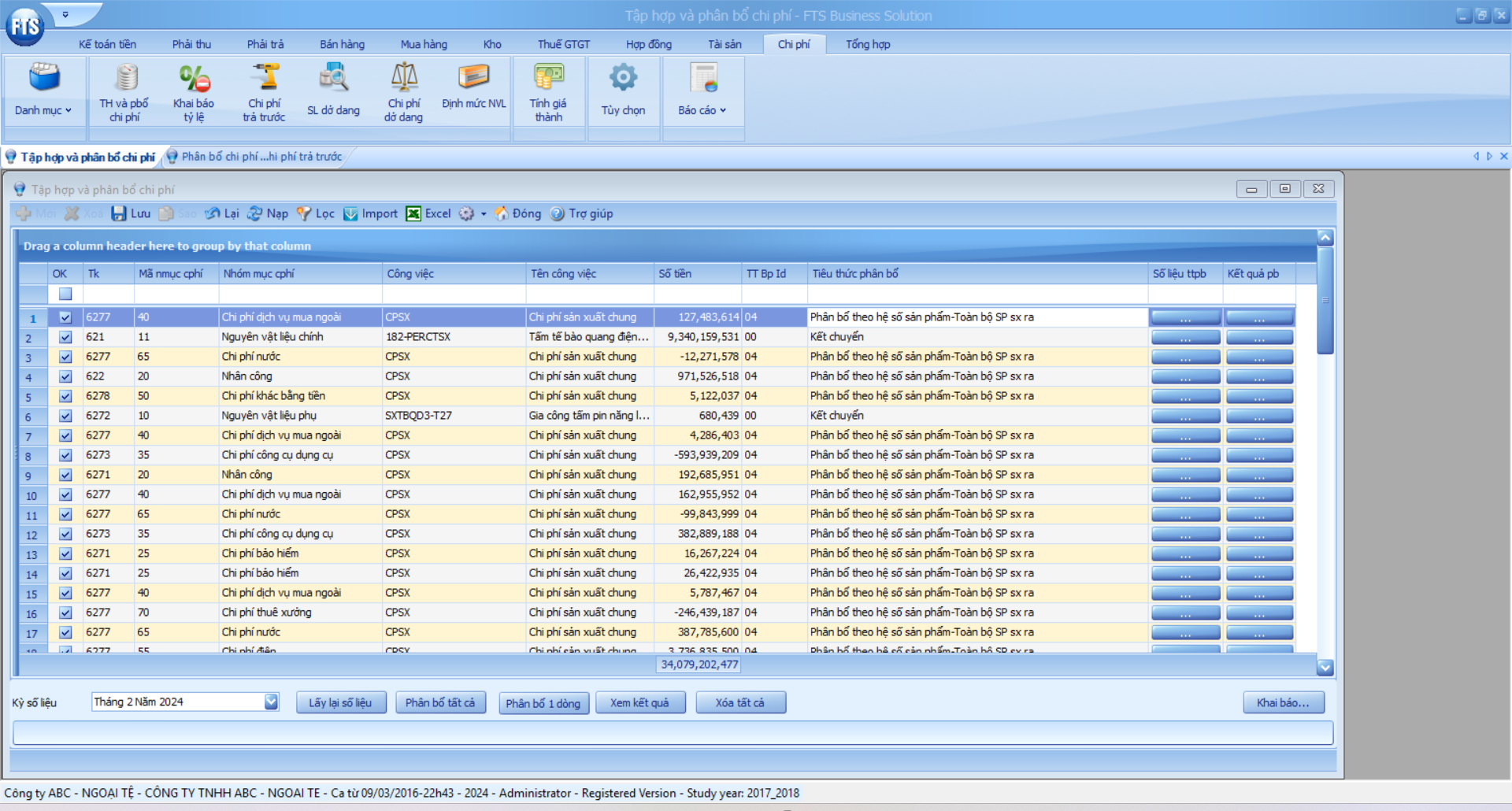
Flexible Allocation Criteria Setup
- Businesses can choose from multiple allocation methods for each type of expense. For example:
- Actual incurred amount
- Offset account
- Value arising from other accounts
- Allocation coefficient
- Finished product ratio
- Main material or consumption quantity
- Actual incurred amount
- Different methods can be applied to each type of expense or department, meeting the needs of diverse models (parent–subsidiary companies, multiple workshops, multiple projects).
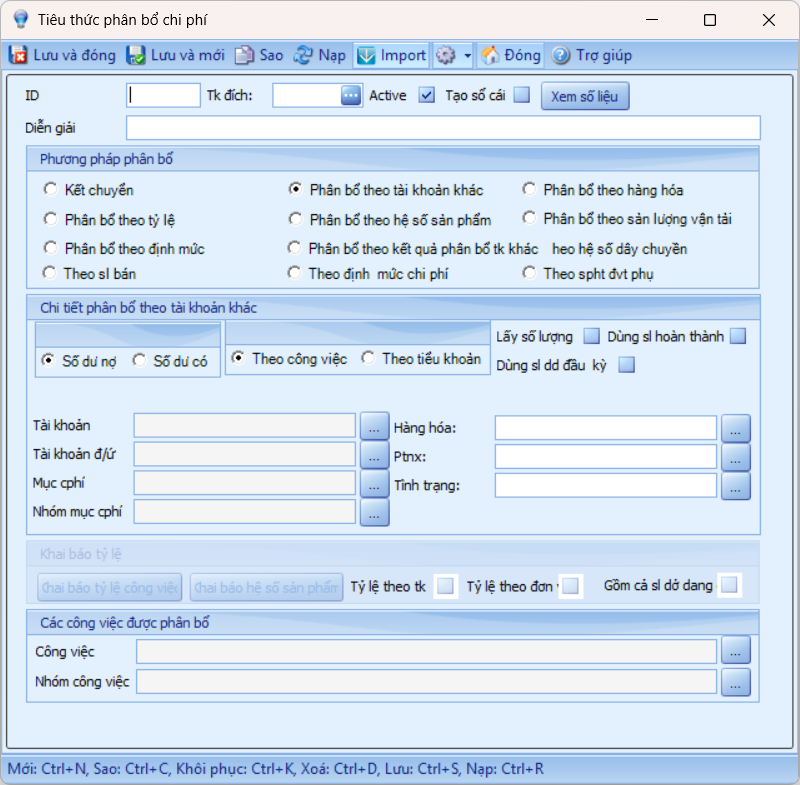
Automatic Allocation
- After setting up the rules, the system automatically allocates expenses to accounting objects, minimizing manual data entry.
- Periodic allocation (monthly, quarterly).
- The allocation results are updated in the accounting books, ready to serve cost calculation and profit–loss reporting by product, order, or project.