


 Share
 Share
 Copy
Cloud ERP is a part of ERP - a comprehensive business management system. Cloud ERP allows users to use it online, saving costs and providing superior features. When deploying cloud ERP, businesses need to pay attention to issues of suppliers, human resources, etc. These factors will be clarified in the article below.
1. What is Cloud ERP?
Concept
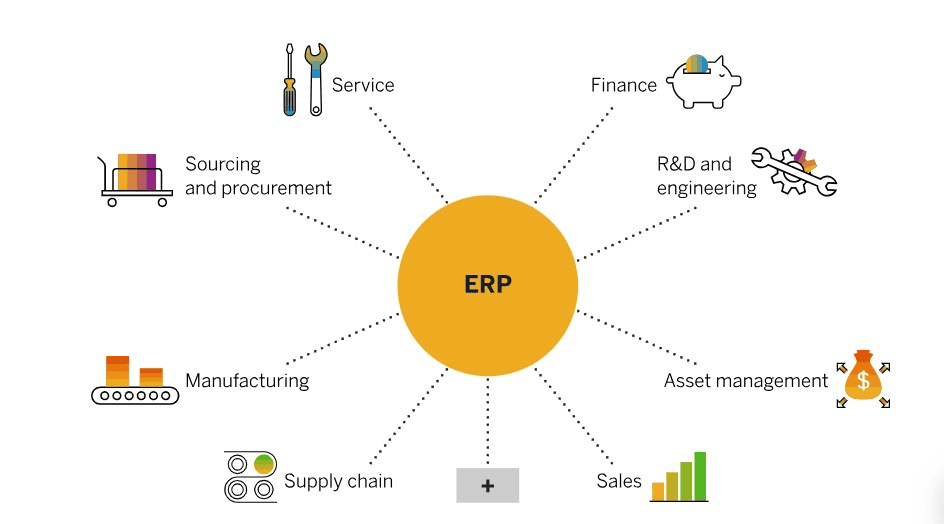
ERP (English: Enterprise Resource Planning) is an Enterprise Resource Planning System. ERP includes many subsystems such as Accounting - Finance Management, Human Resources Management, Warehouse Management, Customer Management and Care, Production Management, etc. All subsystems are integrated on one system to help departments operate on one platform with synchronized information and data. Data is entered into the system once and then shared with all relevant departments.
Cloud ERP is a version of ERP, deployed and stored on a cloud platform (Cloud Computing). This model allows businesses to use ERP features and services without investing in operating a full IT system, because the solution will be installed and data will be stored on the supplier's cloud.
This is considered a flexible and cost-optimized solution, allowing businesses to access ERP data and applications anytime, anywhere with Internet-connected devices
The year 2025 marks a period of digital transformation explosion in Vietnam, when most businesses aim to optimize operations, reduce costs and make faster decisions thanks to digital data. In that picture, Cloud ERP (Enterprise Resource Planning on cloud computing platform) emerges as a comprehensive management solution, helping businesses connect all departments, standardize processes and operate flexibly - anytime, anywhere. If in the past, ERP (enterprise management software) was often associated with local installation systems, high costs and difficult to expand, now, ERP on the Cloud platform has become the inevitable choice - thanks to its flexibility, security and ability to deploy quickly.
When businesses need to apply Cloud ERP
The cloud ERP model is especially suitable for newly established businesses as well as small and medium-sized businesses because of its low operating costs and flexible scalability. In addition, cloud ERP has a fairly short deployment time, administrators can completely deploy it in parallel with business activities.
2. Basic features of Cloud ERP
Allow remote access
Cloud ERP allows users to access data and ERP systems anytime, anywhere via the Internet with mobile devices or personal computers, providing flexibility in use.
Fast deployment ability
Cloud ERP has a relatively short deployment time compared to traditional ERP software deployment. Businesses will take advantage of the cloud infrastructure of the solution provider or a third party to deploy ERP without having to build complex technical infrastructure and install each server.
Cost optimization
Businesses applying Cloud ERP do not need to invest and manage a full IT system and system management personnel, which will reduce costs and allow businesses to focus on core business activities. Cloud ERP is a user-pay-as-you-go model. This helps minimize initial costs, businesses only pay for the features and services they actually use.
Integration and connection
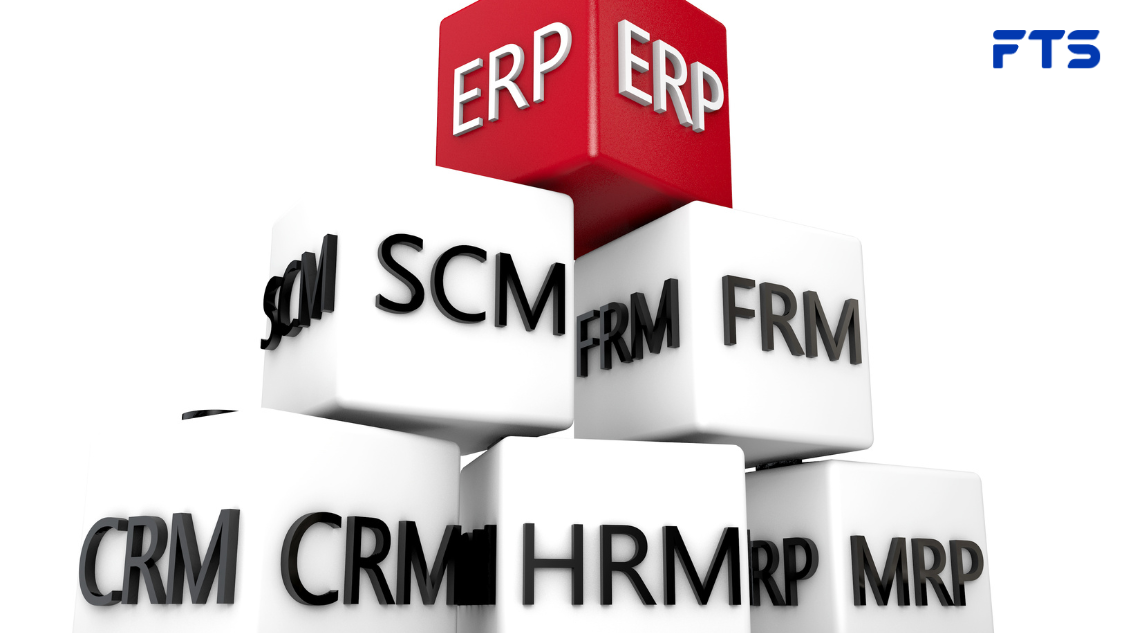
Cloud ERP has the ability to integrate with many other applications and systems such as CRM customer relationship management software, accounting software, SCM supply chain management software, etc., helping businesses increase the connection and interaction between departments and business processes to create a comprehensive and optimal business management system.
3. Benefits when businesses apply Cloud ERP in management
ERP is the center of all areas in a medium-sized enterprise. A good cloud ERP system will intelligently automate processes, provide insights using AI and machine learning, help companies innovate business models, and much more. In addition to these benefits, there are three main reasons why many small and medium-sized companies turn to cloud-based ERP:
Increased flexibility
Cloud ERP helps businesses be agile in expanding and collecting essential data for business operations. Software integrated with ERP allows for linkage, information synchronization, departmental connection, and flexibility in accessing and processing data.
Support financial management - accounting
Cloud ERP allows businesses to integrate accounting processes into business operations to clearly understand the financial status, revenues, expenses, etc., as well as prepare professional financial reports
Reduce costs
Cloud ERP helps businesses integrate software and optimize operational management processes. Therefore, a significant amount of money that businesses invest in managing resources has been reduced, focusing the budget on long-term development goals in the future.
Real-time system updates
Cloud ERP has the ability to update the system in real time, helping businesses optimize costs and limit interruptions in working time.
Support managers in making decisions
Cloud ERP provides real-time data to help managers promptly grasp important information, supporting accurate and quick decision making.
Increase the ability to interact with customers
Cloud ERP can be integrated with CRM customer service management software, allowing businesses to analyze and store customer data to provide suitable new services and products, increasing reliability and interaction with customers.
Improve business performance
ERP helps businesses automate many business processes, limiting errors and mistakes that may occur when entering data manually. Thereby helping to filter information sources accurately, increase reliability, reduce costs for data entry activities, and improve work efficiency.
4. Things to note when businesses deploy Cloud ERP
Before deploying Cloud ERP, businesses need to clearly understand the following factors:
Human factors
People and human resources are always the most important factors of every business. When deploying cloud ERP, there needs to be a consensus on how, understand and be able to exploit ERP functions from leaders to employees in the business.
Have a detailed plan to monitor the progress of ERP project implementation
Businesses need to evaluate whether their company's processes are really suitable when deploying ERP or not, have a plan to control and evaluate the operating/business processes of each department. Calculate the budget when implementing ERP, consider and choose the most appropriate time to deploy.
Choose the right supplier
Deploying and customizing ERP is not simple, especially for businesses with specific and complex processes. Businesses need to consult, evaluate and choose a reputable Cloud ERP solution provider with many years of experience and has deployed for businesses in similar industries.
Equip the basic system .
With the characteristics of cloud ERP operating through the Internet environment, businesses need to equip a technical infrastructure system of network lines, computer configuration, etc. to ensure that ERP implementation is carried out quickly, updated promptly and ensures stable and continuous data processing capabilities.
Establish a separate team
The process of implementing cloud ERP includes many small stages and requires technological expertise. Therefore, businesses should have a separate team to evaluate the process, perform testing and testing stages, etc. to ensure the accuracy of cloud ERP during use.
Focus on implementing ERP solutions
In addition to the coordination between businesses and solution providers, coordination between departments and divisions in the business is an essential factor for successful ERP implementation. Businesses need to build a unified process that demonstrates the roles, tasks, and work connections between departments. Ensure data standardization and consistency when transferring to the ERP system.
5. The trend of shifting to Cloud ERP – inevitable and irreversible
According to Gartner's report, by 2025, more than 85% of ERP systems worldwide will be deployed on cloud platforms.
In Vietnam, this trend is taking place strongly when businesses in many fields – from manufacturing, trade, education to finance – all recognize the power of Cloud ERP in centralized data management and real-time decision making.
The main reasons for this shift come from:
- Flexibility: Easy to expand when the business grows or shrink when optimization is needed.
- Cost optimization: No need to invest in server infrastructure, maintenance, or upgrades.
- Remote access: Manage the business anytime, anywhere, on any device.
- Automatic update: The system is always on the latest version, with optimal security.
- Centralized data: All departments operate on the same unified platform.
6. FTS Cloud ERP – Flexible, smart, customizable according to Vietnamese business requirements
With over 15 years of experience in the field of business management software, FTS is proud to develop the “Make in Vietnam” Cloud ERP platform, fully meeting the needs of multi-industry management: manufacturing, trade, education, finance and agriculture.
The difference of FTS Cloud ERP:
- Customized according to each business’s own process – not forced to follow a pre-made template.
- Multi-system integration: FTS Accounting, HRM, Invoice, CRM, and project management.
- Enterprise-level security: Secure data storage on an international standard Cloud platform.
- Support quick deployment and on-site training.
- Lifetime after-sales service – accompanying businesses on every development journey.
From small and medium-sized enterprises to large corporations, FTS Cloud ERP can be flexibly configured to suit each business’s model, scale and operating strategy.
Digital transformation is becoming a vital factor, and Cloud ERP is the heart of that journey
By 2025, businesses that apply Cloud ERP early will have a superior competitive advantage - from smart management capabilities, cost optimization to enhanced customer experience.
FTS - A trusted technology partner in the digital transformation journey of Vietnamese enterprises.
With FTS, operate smartly – accelerate development – break through in 2025.
Learn more and experience FTS ERP at:
Address: Lilama 10 Building, To Huu Street, Dai Mo Ward, Hanoi City, Vietnam
Email: info@fts.com.vn
Tel: 024 3748 0398 – Fax: 024 3748 0399
 Website: https://fts.com.vn/
Linkedln: https://www.linkedin.com/company/first-trust-solution/


